Category Archives: Uncategorized

February 2016

Welcome

The year 2016 arrived quickly, and a lot already is happening. In this issue new products and activities are highlighted. New products include a Brief developed in collaboration with the National Center for Systemic Improvement (see Lessons Learned…) and a White Paper developed in collaboration with the English Language Proficiency Assessment for the 21st  Century (ELPA21) consortium (see Alternate Assessment …). Two new Enhanced Assessment Grant (EAG) projects are summarized – DIAMOND and ALTELLA (check below for the meaning of those acronyms). Finally, this issue highlights some presentations and meetings at the upcoming conferences in April (CEC and AERA).

– Martha Thurlow, NCEO Director

Lessons Learned About Instruction from Inclusion of Students with Disabilities in College and Career Ready Assessments
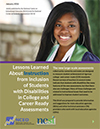
LessonsLearnedAboutInstruction-coverRecent surveys of teachers found that students with disabilities like many of the features of the new college- and career- ready (CCR) assessments that were recently rolled out by states and consortia, but that there are challenges related to instructional issues that need to be addressed to improve student outcomes. To address this issue NCEO and the National Center on Systemic Improvement recently co-published a Brief on Lessons Learned About Instruction from Inclusion of Students with Disabilities in College and Career Ready Assessments.

Read entire story here


Data Informed Accessibility – Making Optimal Needs-based Decisions (DIAMOND)
DIAMOND-just-the-lettersThis year, NCEO is launching a new Enhanced Assessment Grant project titled “Data Informed Accessibility – Making Optimal Needs-based Decisions (DIAMOND).” The DIAMOND project is a collaboration between Minnesota, Alabama, Connecticut, Maryland, Michigan, Ohio, West Virginia, Wisconsin, Virgin Islands, and the National Center on Educational Outcomes.

Read entire story here


Alternate English Language Learning Assessment (ALTELLA)
ALTELLA-logoMost English learners with significant cognitive disabilities are not included in assessments of English language proficiency. As a result, there is little evidence of how these students are progressing toward English mastery to ensure their success in school and on the path to college, career, and community readiness.  One new project underway at NCEO, the Alternate English Language Learning Assessment (ALTELLA) Project, aims to change this.

Read entire story here


Alternate Assessment of English Language Proficiency (ELP) for Students with Significant Cognitive Disabilities
White-Paper-cover-for-WebNCEO developed a white paper to address approaches that states might take for an alternate assessment of English Language Proficiency (ELP) for students with significant cognitive disabilities. The development of this paper was accomplished through the work of NCEO staff with the English Language Proficiency Assessment for the 21st Century (ELPA21) consortium, which is developing an assessment of ELP.

Read entire story here


NCEO Presentations at Upcoming 2016 Conferences
CEC16_160x100-for-webIf you plan to attend this year’s Council for Exceptional Children (CEC) annual convention (April 13-16) held in St. Louis or the American Educational Research Association (AERA) annual meeting (April 8-12) held in Philadelphia, we invite you to attend conference sessions delivered by NCEO staff members.

Read entire story here


NCEO’s National Assessment Center is supported through a Cooperative Agreement (#H326G110002) with the Research to Practice Division, Office of Special Education Programs, U.S. Department of Education. The Center is affiliated with the Institute on Community Integration at the College of Education and Human Development, University of Minnesota. The contents of this report were developed under the Cooperative Agreement from the U.S. Department of Education, but do not necessarily represent the policy or opinions of the U.S. Department of Education or Office within it. Readers should not assume endorsement by the federal government.
Project Officer: David Egnor

October 2015

Welcome!

This October 2015 issue is filled with information! It provides a link to the new NCEO website, with many new topics and lots of new information, plus summaries of and links to several new NCEO products. You will find the report on the National Conference on Student Assessment pre-conference forum, titled Implementing Accessibility Frameworks for ALL Students, which focuses on the challenges and opportunities of the new context of many new assessments. This issue also highlights the results from the 2014 Survey of States, a report on graduation policies for students with disabilities who participate in states’ general assessments, and the latest Data Analytics report on public reporting of state assessment data on students with disabilities.

– Martha Thurlow, NCEO Director

website_homepageNCEO Launches New Website

NCEO has launched its new website (nceo.info), with many new topics and lots of information. The new design makes the site easier to use, and easily accessible across different devices.

read entire story here


NCEO and ASES SCASS Joint Forum on Implementing Accessibility Frameworks for ALL Students

NCEO and the Assessing Special Education Students (ASES) State Collaborative on Assessments and Student Standards (SCASS) recently held a joint forum on the topic of implementing accessibility frameworks for all students. The specific focus of the forum was for participants to hear several perspectives on this topic and then to discuss the challenges.

read entire story here


2014 NCEO State Survey Report

2014cover-for-WebNCEO is pleased to announce that its report titled 2014 Survey of States: Initiatives, Trends, and Accomplishments is available on the NCEO website.

This report highlights the fourteenth survey of states summarizing results for the 50 regular states and eight of the 11 unique states that responded to the survey. The report provides a snapshot of the new initiatives, trends, accomplishments, and emerging issues during this important period of education reform as states documented the academic achievement of students with disabilities.

read entire story here


States’ Graduation Policies for Students Who Participate in General Assessments

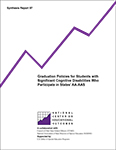
Synthesis-98-Cover-with-artNCEO recently published a new report, Graduation Policies for Students with Disabilities who Participate in States’ General Assessments.

The recent push for all students, including those with disabilities, to leave school ready for college and career has heightened the importance of understanding what states are requiring of students with disabilities to earn a regular diploma.

read entire story here


New Data Analytics Interactive Tool on States’ Publicly Reported Assessment Results

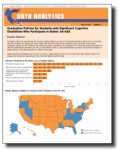
DataAnalyticsCover1finalNCEO recently published an interactive Data Analytics report on States’ 2012-13 Publicly Reported Assessment Results for Students with Disabilities and ELLs with Disabilities. There is wide variation across states in how they publicly report participation and performance data. This is the second in a new series of Data Analytics that NCEO publishes.

read entire story here


NCEO’s National Assessment Center is supported through a Cooperative Agreement (#H326G110002) with the Research to Practice Division, Office of Special Education Programs, U.S. Department of Education. The Center is affiliated with the Institute on Community Integration at the College of Education and Human Development, University of Minnesota. The contents of this report were developed under the Cooperative Agreement from the U.S. Department of Education, but do not necessarily represent the policy or opinions of the U.S. Department of Education or Office within it. Readers should not assume endorsement by the federal government.
Project Officer: David Egnor

June 2015

Welcome

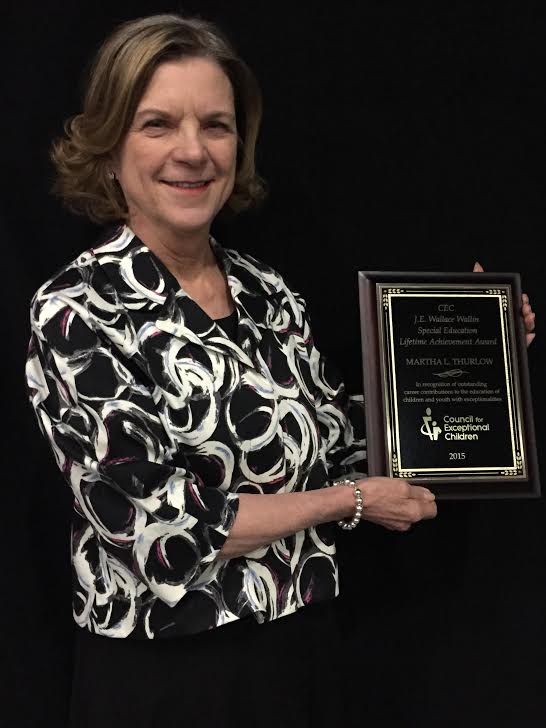
Welcome to June 2015 e-newsletter. This issue provides a preview of the National Conference on Student Assessment pre-conference forum we are holding with the Assessing Special Education Students SCASS – Implementing Accessibility Frameworks for ALL Students. It focuses on the challenges and opportunities of the new context of many assessments – technology based, with new tools available to all students, some accessibility features available to students with documented needs, and accommodations for a defined set of students. We hope that you will join us for this important discussion. Also highlighted in this issue is a new approach that NCEO is taking to present some of its rich data-based reports. Our new series of Data Analytics reports allows the user to obtain customized information about state data and policies. The first report, highlighted in this issue, focuses on graduation requirements for students with significant cognitive disabilities. Look for other topics in the near future! Finally, I was thrilled to be honored at the 2015 Council for Exceptional Children conference in San Diego in April. My colleagues wanted to share the exciting news, so the last article in this issue features my receipt of the CEC Lifetime Achievement Award.

 – Martha Thurlow, NCEO Director

NCSA Pre-Conference Forum: Implementing Accessibility Frameworks for ALL Students

2015-NCSA-BANNER_2-710-x-235-hJoin your ASES and NCEO colleagues for an engaging (and free!) morning focused on the implementation of accessibility frameworks for ALL students. This preconference session will feature a panel discussion that includes states in assessment consortia as well as states that are developing their own new assessments.

 read entire story here

New Data Analytics Interactive Tool on States’ Graduation Policies

DataAnalyticsCover1finalNCEO recently published an interactive Data Analytics report on States’ Graduation Policies for Students with Significant Cognitive Disabilities.  There is wide variation across states in their graduation policies for this population.

read entire story here

Martha Thurlow’s CEC Lifetime Achievement Award

MarthaCECawardOn April 8, 2015, the Council for Exceptional Children (CEC) honored NCEO’s Director, Dr. Martha Thurlow, with the J. E. Wallace Wallin Lifetime Achievement Award for advancing assessment policy and practice in special education. The award was presented at the CEC annual Convention and Expo in San Diego, California.

read entire story here


NCEO’s National Assessment Center is supported through a Cooperative Agreement (#H326G110002) with the Research to Practice Division, Office of Special Education Programs, U.S. Department of Education. The Center is affiliated with the Institute on Community Integration at the College of Education and Human Development, University of Minnesota. The contents of this report were developed under the Cooperative Agreement from the U.S. Department of Education, but do not necessarily represent the policy or opinions of the U.S. Department of Education or Office within it. Readers should not assume endorsement by the federal government.
Project Officer: David Egnor

February 2015

Welcome

Here we are in 2015 already! This issue of the NCEO e-newsletter includes highlights of findings from a recent NCEO report on graduation requirements for students with significant cognitive disabilities who participate in the alternate assessment based on alternate achievement standards (AA-AAS). We also provide snapshots of updates on the six assessments consortia – PARCC, Smarter Balanced, DLM, NCSC, ASSETS, and ELPA21! These snapshots focus on the consortia’s efforts for students with disabilities and ELLs, including ELLs with disabilities. Finally, if you will be in Palm Springs for the ATP Conference, or in San Diego for the CEC Conference, or in Chicago for the AERA/NCME Conferences, we have for you a list of the sessions that will be delivered, moderated, or chaired by NCEO staff. As always, we welcome feedback and ideas about what you would like to see in future issues of NCEO’s e-newsletter.

Synthesis-97-Cover-with-art-for-newsletterStates’ Graduation Policies for Students with Significant Cognitive Disabilities

Graduation rates and requirements for earning a regular diploma are topics of increasing interest as states focus on ensuring that their students are college and career ready when they leave school with a diploma. Considerable attention has been given to those students with disabilities who participate in states’ general assessments. Recently, attention has turned to students with significant cognitive disabilities who participate in states’ alternate assessments based on alternate achievement standards (AA-AAS).

read entire story

Consortia Updates

shutterstock_210236821The six consortia of states developing new assessments are each focusing on the needs of students with disabilities and English language learners (ELLs) as they move toward their operational assessments. Highlighted here are updates on each of the consortia’s efforts for students with disabilities and ELLs, including ELLs with disabilities.

read entire story


NCEO Presentations at Upcoming 2015 Conferences

If you plan to attend this year’s Association of Test Publishers (ATP) annual meeting (March 1-4) held in Palm Springs, CA, Council for Exceptional Children (CEC) annual convention (April 8-11) held in San Diego, CA, or American Educational Research Association (AERA) annual meeting (April 16-20) held in Chicago, IL, we invite you to attend conference sessions delivered, moderated, or chaired by NCEO staff members.

read entire story


NCEO’s National Assessment Center is supported through a Cooperative Agreement (#H326G110002) with the Research to Practice Division, Office of Special Education Programs, U.S. Department of Education. The Center is affiliated with the Institute on Community Integration at the College of Education and Human Development, University of Minnesota. The contents of this report were developed under the Cooperative Agreement from the U.S. Department of Education, but do not necessarily represent the policy or opinions of the U.S. Department of Education or Office within it. Readers should not assume endorsement by the federal government.
Project Officer: David Egnor

October 2014

Welcome

This issue of the NCEO e-newsletter includes news of the launching of the 2014 NCEO Survey of States, along with brief summaries of two new reports on accommodations on English language proficiency assessments for low-incidence disabilities. In addition, it highlights resources available from the July webinar on Successfully Transitioning Away from the 2% Assessment. Many of these resources are applicable to states seeking ways to improve use of data to identify intervention approaches, provide access to instruction, and improve implementation of standards-based IEPs. As always, we hope that you share this issue of NCEO’s e-newsletter with your colleagues.

surveyAnd, because we want to be sure that this e-newsletter meets your needs and those of your colleagues, we hope that you will take a minute to respond to a few questions about the ways in which we can improve the NCEO e-newsletter for you.

NCEO e-Newsletter Survey


Resources from the NCEO Webinar on Successfully Transitioning Away from the 2% Assessment

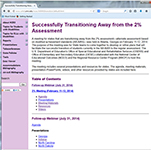
2percentWebPgNCEO, with assistance from the Regional Resource Center Program (RRCP), recently held a webinar for states that are transitioning away from the 2% assessment—the alternate assessment based on modified achievement standards (AA-MAS). The materials from this webinar are available on the NCEO website that contains resources for states transitioning away from the 2% assessment.

read entire story here…

2014 NCEO Survey of States Launched!

survey2NCEO is pleased to announce that on September 10, 2014, it launched its biennial Survey of States. This survey, which addresses important initiatives, trends, accomplishments, and emerging issues in states relative to the participation and performance of students with disabilities in state assessment and accountability systems, is the 14th survey of states that NCEO has conducted over the past 24 years.

read entire story here…

IVARED-Blind-VI-coverNew Reports on Accommodations on English Language Proficiency Assessments for Students with Low-Incidence Disabilities

Including students with low-incidence disabilities (e.g., students who are blind and students who are deaf) on all domains of an English language proficiency (ELP) assessment can be challenging. For example, how is reading in English measured for students who are blind and typically access text through braille? Similarly, how is listening in English measured for students who are deaf and usually receive information communicated orally through American Sign Language (ASL) or closed captioning? These are challenges that state departments of education have addressed through accommodations policies for ELP assessments. Two new NCEO publications address accommodations on ELP assessments.

read entire story here…

NCEO’s National Assessment Center is supported through a Cooperative Agreement (#H326G110002) with the Research to Practice Division, Office of Special Education Programs, U.S. Department of Education. The Center is affiliated with the Institute on Community Integration at the College of Education and Human Development, University of Minnesota. The contents of this report were developed under the Cooperative Agreement from the U.S. Department of Education, but do not necessarily represent the policy or opinions of the U.S. Department of Education or Office within it. Readers should not assume endorsement by the federal government.
Project Officer: David Egnor